 Skip to content

Published 16 August 2021 Last reviewed 11 July 2026 By SMC Custom Installs
A well-designed smart home doesn’t save energy by nagging you. It saves energy by making the efficient thing happen automatically. Heating that follows how you actually use the house, lighting that’s never left burning in empty rooms, shading that works with the sun instead of against it. This guide covers where a professionally installed system genuinely earns its keep, and where the marketing gets ahead of reality.
Key points
- The biggest wins are heating zoning and control: heating only the rooms you use, when you use them
- Lighting scenes, occupancy sensing and a whole-house “off” command quietly remove everyday waste
- Motorised shading helps manage solar gain, keeping heat out in summer and in during winter evenings
- Leak detection and energy monitoring catch problems and waste you’d otherwise never see
- Savings are real but they vary by property, so treat them as a welcome bonus, not the whole business case
Heating: the biggest lever in the house
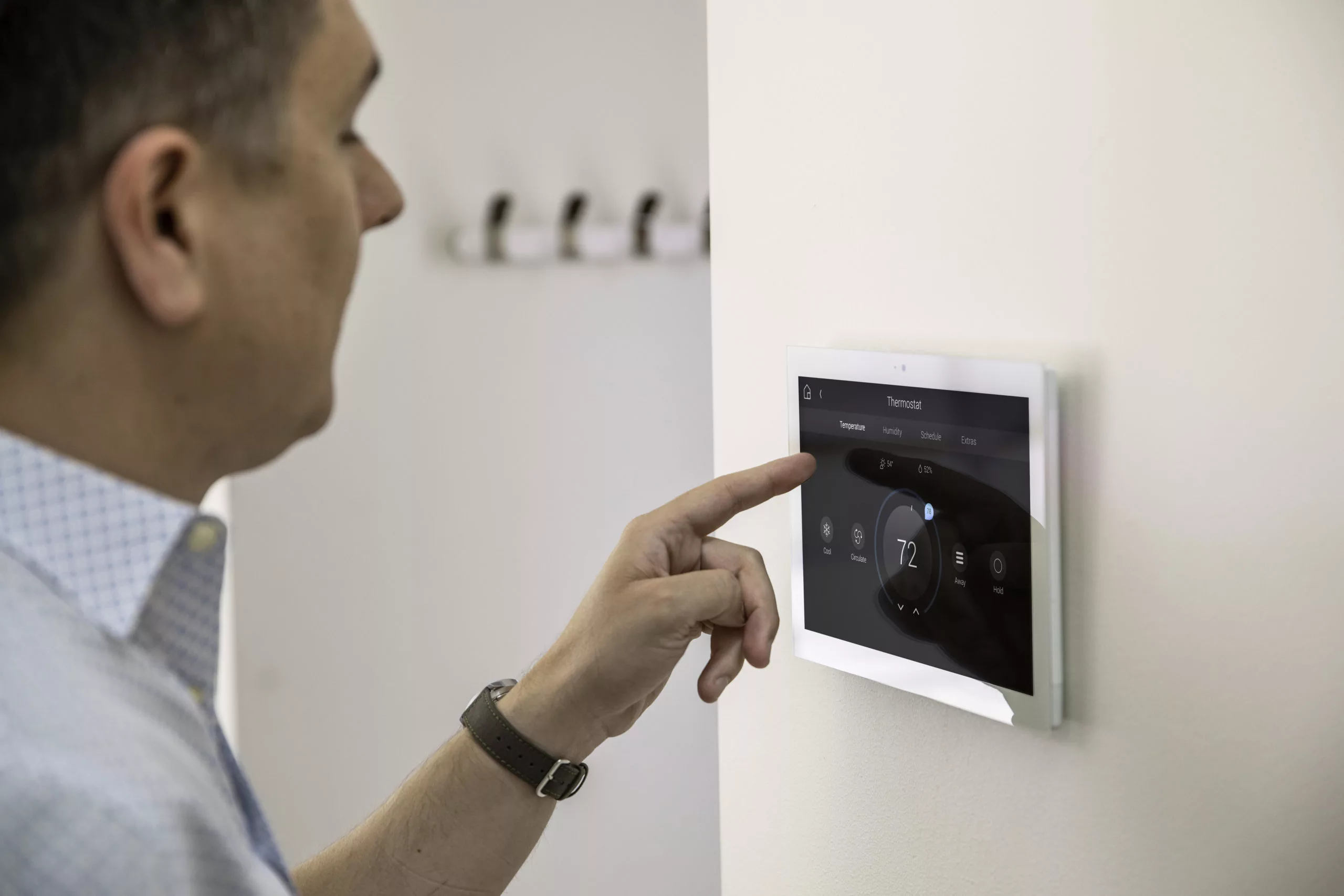
Space heating dominates most homes’ energy use, so it’s where intelligent control matters most. A zoned system lets each area run its own schedule and temperature: bedrooms warm for the evening, the office warm for the working day, guest rooms ticking over until they’re needed. Integrated into a Control4 system, heating can also respond to the way the house is actually being used: setting back when the house is empty and recovering before you’re home.
None of this requires you to think about it, which is precisely why it works. Efficiency measures that rely on daily human discipline tend to fade; automation doesn’t get bored.
Lighting: scenes, sensors and the whole-house off
LED lighting is already efficient, so the remaining waste is lights running where nobody is. A designed system attacks that from three angles:
- Scenes put exactly the right light in the right place. An “evening” scene runs a handful of circuits gently dimmed rather than every fitting at full output.
- Occupancy sensing looks after the rooms people forget: utility rooms, hallways, bathrooms and garages light when entered and switch off after.
- One-touch off is the quiet hero: a single button by the front door or bedside that turns off every light (and anything else you choose) in the house. No more lap of the house at bedtime.
There’s more on how scenes and control transform a home in our guide to smart lighting design.
Shading and solar gain
Windows are where heat pours in on summer afternoons and leaks out on winter nights. Motorised blinds and curtains turn that from a chore into a strategy: shading can lower automatically on hot south-facing elevations in summer, and close as the temperature drops on winter evenings to keep warmth in. It’s comfort first (rooms that never bake or freeze), with the energy saving built into the behaviour.
Seeing problems: monitoring and leak detection
You can’t manage what you can’t see. Energy monitoring shows where the house actually uses power. There are often surprises, like the ancient freezer in the garage quietly costing more than the cinema room. Water leak detection matters just as much: sensors at tanks, cylinders and appliances can alert you, and shut off the supply, before a slow drip becomes a ruined ceiling and weeks of drying out. Waste avoided is the least glamorous saving, and often the largest.
An honest word about payback
Will a smart home system pay for itself in energy savings alone? Treat any such promise with caution, because savings depend on the property, the heating system and how the house is used. What a well-designed system reliably delivers is a home that wastes less by default: heat where it’s needed, light where it’s wanted, shading working with the seasons, and problems surfaced early. The savings are a genuine, ongoing bonus on top of a more comfortable house — that’s the honest pitch.
It’s also worth saying: plug-in gadgets and standalone bulbs have their place, but they aren’t what we do. Our work is whole-house systems, professionally designed and installed, where efficiency is engineered in, not bolted on.
Frequently asked questions
What saves the most energy in a smart home?
Heating control, by a distance: zoning, scheduling and occupancy-aware setback. Lighting scenes and automated shading follow behind, with monitoring and leak detection preventing costly waste rather than trimming daily use.
Do I need to replace my boiler or heating system?
Usually not. Intelligent control works with most existing heating systems. We survey what you have and design the control layer around it.
Can I see my energy use room by room?
Monitoring can be designed to the level of detail you want, from whole-house consumption to individual circuits. We’ll recommend a sensible level for your property — more detail isn’t always more useful.
Where do I start?
Call 01743 234945 or use the contact form. The best first step is a conversation about how you use the house and a visit to the Shrewsbury showroom.
Questions About Any of This?
Whether you already own a system that’s playing up or you’re just starting to plan your first project, tell us what’s on your mind and you’ll get a plain answer from the team. Based in Shrewsbury, working across Shropshire, Cheshire, Staffordshire, the West Midlands and the Welsh borders.
Get In Touch Or call 01743 234945 · info@smccustominstalls.co.uk