 Skip to content

Published 11 July 2026 Last reviewed 1 September 2026 By SMC Custom Installs
We don’t replace electricians — we work alongside them. SMC Custom Installs handles the low-voltage and control side of a project: data cabling, AV, control systems and Lutron lighting-control programming. The electrician keeps everything they already own: mains circuits, consumer units, certification and sign-off. We’ve been installing smart home systems from Shrewsbury since 2006, and some of our smoothest projects are the ones where a local electrician and our six-strong team split a job cleanly down that line.
Key points
- Clear division of labour: electricians do mains circuits, consumer units and certification; we supply, configure, program and commission the specialist control system (data, AV, Control4 and Lutron)
- On smart lighting projects we design the keypad and circuit plan together, so the wiring is done once, correctly
- We hand over proper documentation (circuit schedules and keypad layouts), not a verbal walkthrough
- Referring a client to us doesn’t mean losing the job: the electrician keeps all the mains work
- We welcome working with any local electrician: there’s no exclusive list, and the first conversation costs nothing
Who does what: the division of labour
The line between our work and an electrician’s work is well established, and we stick to our side of it. On a typical project:
- The electrician: installs, terminates, tests and certifies the mains side within their scope, meaning circuits, consumer units, distribution, RCD protection, sockets and lighting circuits. Their qualifications, their test results, their signature.
- SMC: the low-voltage and control layer, covering structured data cabling, speaker and AV wiring, network and Wi-Fi, Control4 systems, and the design and programming of Lutron lighting and blind control.
Where the two meet (a lighting circuit that lands on a Lutron dimming panel rather than a standard switch, for instance), we agree the interface point before anyone pulls a cable. The electrician wires to a documented termination point; we take it from there. Nobody is guessing at what the other trade intended, and nobody’s sign-off depends on work they didn’t do.
We’re trained and insured on the systems we install: Control4 certified, and Lutron-trained across HomeWorks and RadioRA 3, with support for legacy RadioRA 2 systems. The control side of the job therefore carries its own accountability. The electrician certifies their installation; we stand behind ours.
Smart lighting: plan it together, wire it once
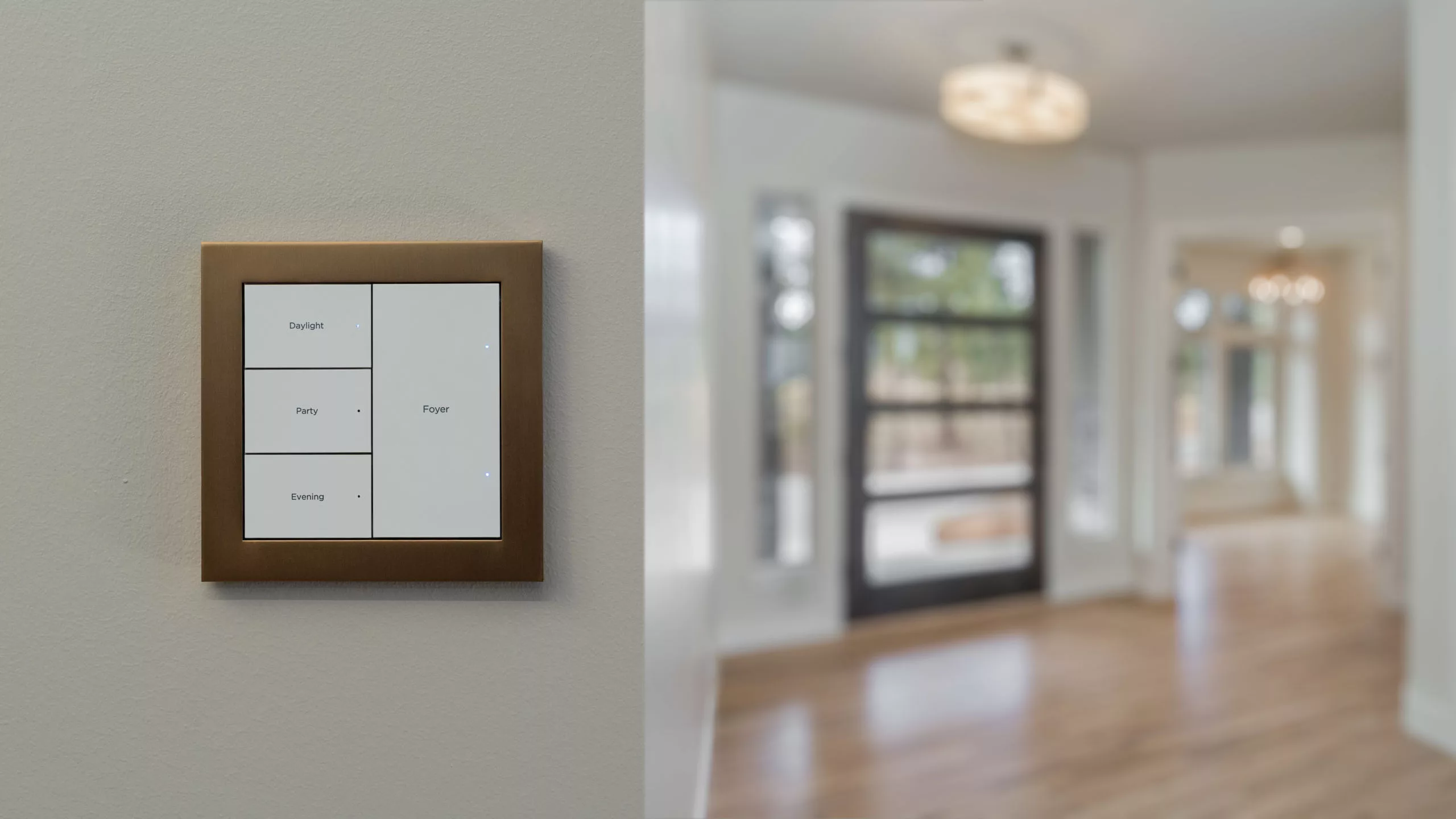
Most of the friction on smart lighting jobs happens before anyone touches a screwdriver. A Lutron system changes how the lighting circuits need to be arranged: circuits are grouped by how rooms are actually used, keypads replace banks of switches, and some walls that would have held four gangs of toggles end up holding a single keypad. If that’s discovered after first fix, the rework is painful and the client pays for it twice. Building or renovating? Our before-first-fix guide covers the nine cabling decisions to make before the plaster goes on, and includes a free plans review.
So on smart lighting projects we sit down with the electrician early and design the plan together:
- Circuit plan: we work out the circuit groupings with the electrician, agreeing what dims, what switches, what lands on the Lutron panel and what stays conventional, so their cable runs are right the first time.
- Keypad plan: keypad positions and back-box requirements are marked on the drawings before first fix, not negotiated on site.
- Loads: we flag anything the control system cares about (LED driver compatibility, minimum loads, circuit limits on the dimming modules) so there are no surprises at commissioning.
The electrician then wires the job exactly as they normally would, to a plan both sides have agreed. Once the electrician’s second fix is complete, we install and connect the control equipment, then configure, program and commission the system. If you want a fuller picture of how that sequencing works across a whole build, our article on when to involve a smart home installer in the wiring covers it, and the companion piece on working with builders looks at the same question from the main contractor’s side.
“My client wants smart lighting”: you don’t lose the job
This is the conversation we have most often with electricians: a client on a rewire or an extension asks about “smart lighting” or mentions Control4, and it’s beyond what the electrician wants to take on. Understandably — keeping current on one manufacturer’s control platform is a job in itself, and we have an in-house programmer whose job it literally is.
Here’s the part worth being clear about: bringing us in doesn’t mean handing over the job.
- The electrician keeps all the mains work: every circuit, every board, every certificate. A Lutron project usually means more wiring for them, not less, because clients tend to add circuits once they see what scene control can do.
- We come in as the specialist for the control layer. Plenty of electricians introduce us exactly that way, and we’re comfortable working as part of your team.
- Their sign-off isn’t at risk. They certify the mains installation they wired; the control system is designed, installed and supported by a team trained on it, with insurance to match.
The alternative (saying no to the client, or having a hobbyist system bolted on afterwards) tends to end with a call-out the electrician doesn’t want. A clean referral usually ends with a happy shared client and the next job coming back the same way.
Documentation and answers within one working day
Two practical things electricians tell us they value most about working with us.
First, paperwork that’s actually useful. Before first fix you get a circuit schedule and keypad layout for the job: what each circuit feeds, where it terminates, what back boxes go where. When the job’s done, the documentation is updated to match what was installed, so whoever opens that board in five years’ time isn’t working from folklore.
Second, someone answers the phone. We’re a six-person team with office staff and an in-house programmer, not one van and a voicemail. If you’re on site and something on the plan doesn’t match what’s in front of you, you call 01743 234945 and get an answer within one working day. Jobs stall when questions sit unanswered; we’ve built the team so they don’t. There’s more on how we work with the trade, including interior designers.
Frequently asked questions
Do you work with a fixed list of electricians?
No. We work with any local electrician, whether it’s your first job with us or your fiftieth. If you’ve got a client asking for something beyond the mains side, call us and we’ll take it from there together.
Will you take over the electrical work on my job?
No. Mains electrical work remains the electrician’s domain: circuits, boards and certification stay yours. We handle data cabling, AV, control systems and Lutron programming, and we agree the boundary between the two in writing before the job starts.
Whose responsibility is the smart lighting system if something goes wrong?
Ours. We’re Control4 certified and Lutron-trained on HomeWorks and RadioRA 3 (we also support legacy RadioRA 2 systems), and we’re insured for the systems we install. Your certification covers your installation; the control system is supported by us, long after handover.
How early should you be involved in a rewire or new build?
Before first fix, ideally when the lighting plan is still on paper — that’s when circuit groupings and keypad positions can be set so the wiring is done once. Call 01743 234945 or use the contact form and we’ll go through the drawings with you.
Questions About Any of This?
Whether you already own a system that’s playing up or you’re just starting to plan your first project, tell us what’s on your mind and you’ll get a plain answer from the team. Based in Shrewsbury, working across Shropshire, Cheshire, Staffordshire, the West Midlands and the Welsh borders.
Book a Showroom Demo Book a 20-Minute Call Get In Touch Or call 01743 234945 · info@smccustominstalls.co.uk