 Skip to content

Published 19 July 2026 Last reviewed 7 October 2026 By SMC Custom Installs
The short answer: choose a smart home installer on the size and depth of their team, whether this is their whole business or a sideline, what happens after installation day, their financial footing, and what you can actually see working, not on the bottom line of a quote. A smart home is a ten-year relationship, not a purchase, and the cheapest bid is usually cheap because something you’ll later need has been left out. Here are the twelve questions we’d ask anyone quoting for our own homes, and that we’re happy to be asked ourselves.
This industry is unregulated: anyone with a van and a logo can call themselves a smart home installer. A good share of our work is rescuing systems whose original installer has vanished, so we’ve seen exactly where the corners get cut. These questions are how you spot the corners before you sign.
The twelve questions
1. Who actually does the work, and how many of you are there?
A one-person operation can be genuinely skilled, but one person means one brain holding your programming, one diary, one set of holidays, and nobody to answer the phone from the back of a loft. Ask how many people are in the business, who designs, who installs and who programs. A team means your system doesn’t depend on a single individual staying healthy, interested and in business. For reference, we’re a six-person in-house team: no subcontracted programmers, no borrowed engineers.
2. Is this your main business, or a sideline?
Plenty of firms offer “smart home” as an add-on to another trade. Electricians are the common example, and to be clear, we rate good electricians highly and work alongside them on most projects. But wiring a house and living with control systems are different disciplines.
When smart home work is something fitted in between rewires, the design, programming and long-term support tend to be learned on your project. Ask what proportion of their work is smart home systems, who does the programming, and how many systems like yours they currently look after. A specialist does this every working day, trains on it every year, and has seen your problem before.
3. What happens when something stops working?
This is the question that matters most and gets asked least. What are the support hours? Is there a number a human answers? Can faults be fixed remotely? Is there an aftercare plan with defined response times, or is support a favour you’ll be asking for?
Ask what their normal response time is, too: plenty of good companies, ours included, won’t promise a contractual SLA, and an honest “here’s how quickly we usually get to things” is worth more than a guarantee nobody measures. Any installer can fit equipment; the good ones are structured to still be looking after it in year seven.
4. Can I see and hear a working system before I commit?
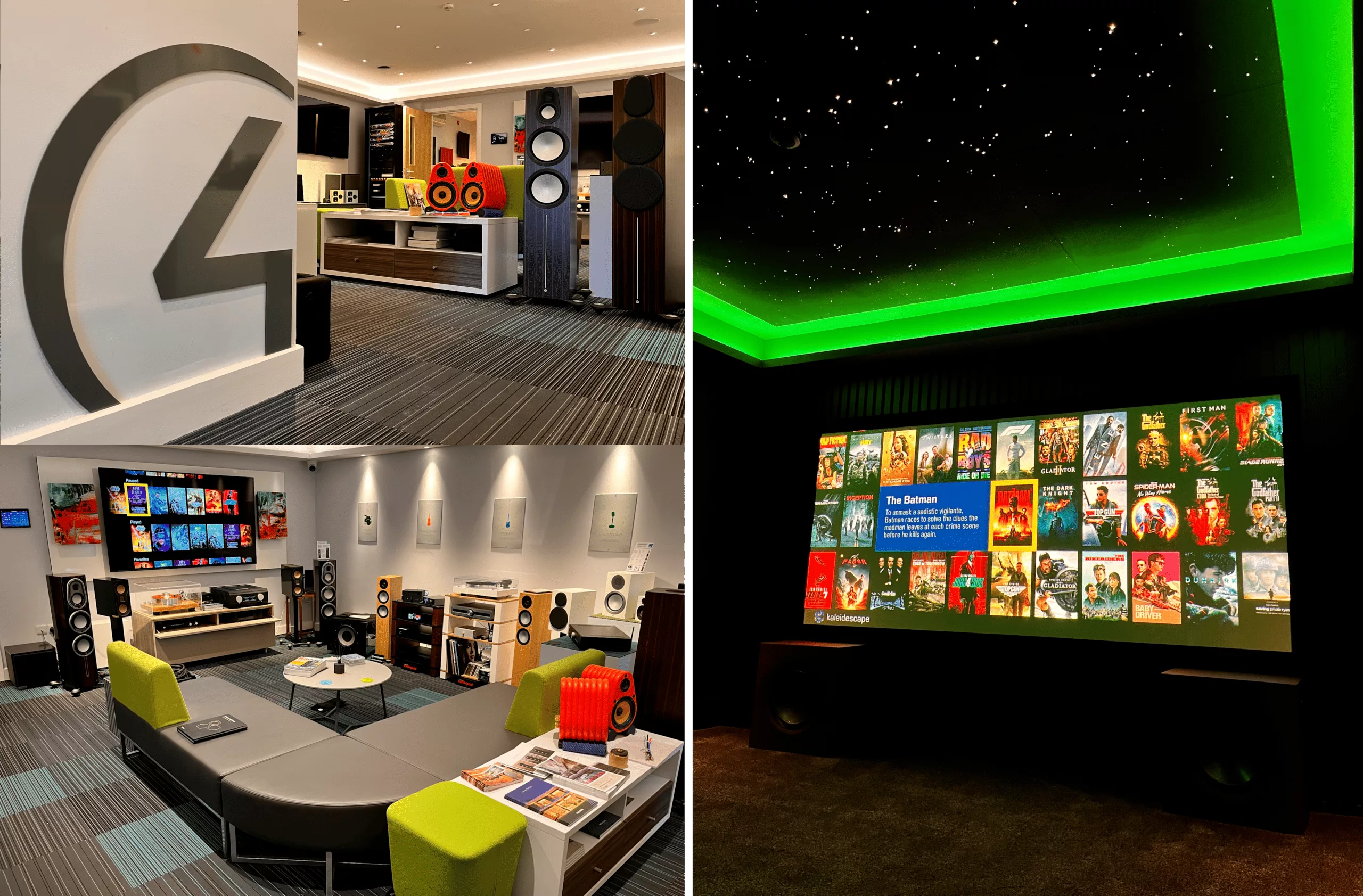
Brochures all look the same. A demonstration doesn’t. If an installer has a showroom or demo facility, use it: sit in the cinema, press the keypads, watch the lighting scenes change. You’re about to spend serious money on how something feels to live with, and feel can’t be judged from a PDF. Judge what’s being offered by experiencing it, not by comparing two flat numbers on quotes that don’t contain the same things.
5. How long have you been trading?
Systems outlive companies depressingly often. We regularly take over Control4 systems and Lutron systems whose installers have disappeared, leaving owners with no programming files and no support. Longevity is no absolute guarantee, but a company that has traded through twenty years of technology changes has proven it can adapt. Ask when they were established and how many of their early clients they still look after.
6. Would you be comfortable paying this company a deposit?
Deposits are normal and reasonable in this industry: equipment is ordered specifically for your project, and no company should be expected to fund that on goodwill. The real question is whether your money is safe while the work happens, and that comes down to stability. Spend ten minutes on Companies House (it’s free):
- How long has the company really existed?
- Are accounts filed on time?
- Do the accounts suggest a business with genuine cash reserves rather than one running hand to mouth?
A stable company holds your deposit against your equipment; a struggling one uses it to pay for the previous job, and that difference is invisible on a quote until something goes wrong. Ask for insurance certificates too: public liability and professional indemnity. An established firm hands these over without blinking.
Then ask what paperwork protects you:
- Are there written terms and conditions, and do they say what happens if either side walks away?
- Are payments staged against progress rather than demanded up front?
- For larger equipment orders, will they issue a vesting certificate, the construction-industry document that makes goods legally yours once paid for, even while they sit in the installer’s store?
To be clear, none of this is about how corporate a company feels: some of the best firms in this industry are small and refreshingly informal to deal with. It is simply about whether a client is protected if things go wrong. People handing over money mid-project to a company that then folds is how half-finished systems end up on our workbench.
7. Are you certified by the brands you install?
Manufacturer certification means factory training, access to proper technical support and accountability to the brand. Ask what they hold and check it: Control4 lists its certified showrooms, Lutron its dealers. Then ask what ongoing training the team does, because these platforms change every year.
8. Who owns the programming, and where do the files live?
Almost nobody asks this, and it’s the question that decides whether your system can ever be looked after by someone else. Ask where the programming files are kept, whether they’re backed up, and what happens to them if the company closes. An installer who bristles at this question is telling you something.
9. What exactly is in the quote?
Two quotes for “the same” system can be thousands apart because one includes design time, a proper network, programming, commissioning and handover training, and the other is a list of boxes. Ask for itemised quotes and compare what’s included, not the total. A flat number tells you almost nothing; what’s behind it tells you everything.
10. Who looks after the network?
Most “smart home problems” are really network problems. If the installer treats the router, switches and WiFi as someone else’s job, every future fault becomes a finger-pointing exercise between them, your broadband provider and whoever fitted the WiFi. The network should be designed, installed and supported by the same people who put the system on it. Our view is in why your smart home needs a proper network.
11. Can I see real projects and real reviews?
Ask for recent Google reviews (read the newest, not the average), photographs of their own installations rather than manufacturer stock images, and ideally a client or two who’ll take a call. Established installers have this to hand; new or careless ones change the subject.
12. What do I get at handover?
The job isn’t finished when the equipment works; it’s finished when you know how to live with it. Ask what training you’ll get, what documentation is left behind, and who to call in six months when you’ve forgotten how the holiday mode works. The answer tells you whether they think the relationship ends at the invoice.
Frequently asked questions
Is the cheapest quote a bad sign?
Not automatically, but a quote thousands below the others usually means something is missing: design time, a proper network, programming hours or any provision for support. Compare itemised quotes line by line rather than totals, and ask what happens after installation is priced in.
How do I check a smart home installer is financially sound?
Search the company on Companies House, which is free: look at how long they’ve traded, whether accounts are filed on time and what the accounts show. Ask for public liability and professional indemnity insurance certificates. Since paying a deposit is normal, you want a stable company with genuine cash reserves behind it, written terms and conditions, and for larger orders a vesting certificate so equipment becomes legally yours once paid for.
Can an electrician install a smart home?
Good electricians are essential to smart home projects, and specialists work alongside them constantly. The wiring is genuinely their trade; the system design, programming and long-term support usually aren’t. If smart homes are a sideline rather than the core business, ask who programs the system and who supports it in three years.
How big should a smart home company be?
Big enough that your system doesn’t depend on one individual. A small in-house team of five to ten people is a sweet spot: large enough for cover, holidays and specialisation, small enough that the people who designed your system are the ones who answer when you call.
What certifications should I look for in the UK?
Certification from the brands actually being installed: Control4 certification for Control4 systems, authorised Lutron dealer status for Lutron lighting, and evidence of current training rather than a logo from years ago. Manufacturer dealer-finder pages are the quickest way to verify claims.
Should I visit a showroom before choosing an installer?
Yes, if one exists within reach. An hour in a working demonstration space tells you more about both the technology and the company than any brochure or video call, and how an installer demonstrates is a fair preview of how they’ll support.
If you’re weighing up a project, put us through the same test: read about the team, book time in our Shrewsbury showroom or a demonstration, look at our aftercare plans, check us on Companies House, and ask us all twelve questions. Based in Shrewsbury, working across Shropshire, Cheshire, Staffordshire, the West Midlands and the Welsh borders. Our smart home planning questions guide is a good next read if you’re still at the thinking stage.
Questions About Any of This?
Whether you already own a system that’s playing up or you’re just starting to plan your first project, tell us what’s on your mind and you’ll get a plain answer from the team. Based in Shrewsbury, working across Shropshire, Cheshire, Staffordshire, the West Midlands and the Welsh borders.
Book a Showroom Demo Book a 20-Minute Call Get In Touch Or call 01743 234945 · info@smccustominstalls.co.uk