 Skip to content

Published 11 July 2026 Last reviewed 7 October 2026 By SMC Custom Installs
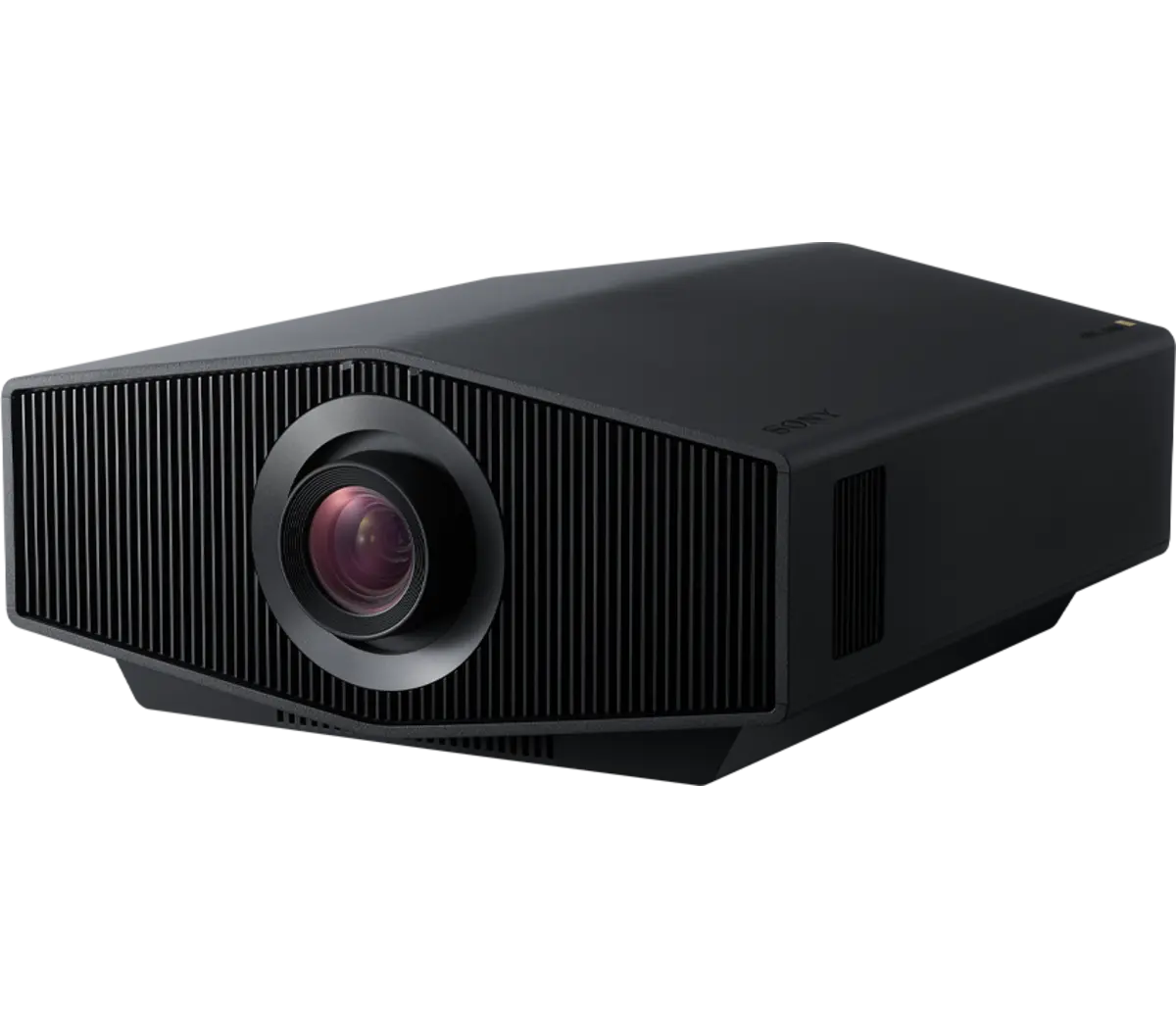
There’s no outright winner between native 4K and 4K enhancement. The honest answer is that it depends on your room, your screen size and how much light you need to fight. The Sony VPL-XW6100ES builds its picture on true native 4K panels, so every one of the 8.3 million pixels in a 4K film has its own physical pixel on the chip.
The Epson EH-QB1000 takes a different route, shifting three Full HD panels at very high speed to paint the same 8.3 million pixels on screen, and uses the savings to deliver considerably more brightness. Both approaches produce genuinely superb pictures, and we install both. The only reliable way to choose is to sit in front of them — which is exactly why we keep the two projectors on demonstration together in our Shrewsbury showroom.
Key points
- Native 4K (Sony SXRD) gives each of the 8.3 million pixels its own place on the panel: the sharpest possible starting point, especially on very large screens viewed up close.
- 4K enhancement (Epson) shifts Full HD panels four ways per frame to display the full 4K pixel count, and on real film content the difference is far smaller than the spec sheets suggest.
- The Epson EH-QB1000 produces 3,300 lumens of equal white and colour brightness; the Sony VPL-XW6100ES produces 2,700 lumens; brightness matters most in rooms that aren’t fully blacked out.
- Sony’s XR processor brings its cinema heritage to tone mapping, motion and black depth; Epson counters with HDR10+ support and a 5,000,000:1 dynamic contrast ratio.
- Both the Epson EH-QB1000 and Sony VPL-XW6100ES are on demonstration in our Shrewsbury showroom, so you can compare them on the same screen before deciding.
What “native 4K” and “4K enhancement” actually mean
A 4K film contains 3,840 × 2,160 pixels, about 8.3 million in total. The question is how the projector gets them onto your screen.
The Sony VPL-XW6100ES uses three of Sony’s 0.61-inch SXRD panels, each with a genuine 3,840 × 2,160 grid. Every pixel in the source has a matching pixel on the chip, all displayed at the same instant. This is the same fundamental approach used in commercial cinema projection, and it’s why native 4K machines have a reputation for effortless fine detail: film grain, fabric texture, distant faces in a crowd.
The Epson EH-QB1000 uses three Full HD 3LCD panels and Epson’s latest four-way pixel-shifting technology. Think of it like this: the panel draws a quarter of the picture, then an optical element nudges the image diagonally by a fraction of a pixel and draws the next quarter, four times per frame, faster than your eye can follow.
The result is all 8.3 million pixels of the 4K source displayed on screen: not upscaled or approximated, but built up in rapid passes rather than all at once. Epson’s current four-way system is a clear step up from earlier generations, which only doubled the pixel count.
Is pixel shifting “fake 4K”? Not really. On a test pattern, a trained eye at close range can find the difference. On an actual film at a normal seating distance, most people struggle to tell them apart — a finding echoed across independent reviews of the QB1000. That’s precisely why the rest of the specification matters so much.
How the two projectors compare
Resolution is only one line on the spec sheet. Here’s how the two machines stack up on the things that shape what you actually see:
| Feature | Sony VPL-XW6100ES | Epson EH-QB1000 |
|---|---|---|
| Panel & resolution | Three native 4K SXRD panels (3,840 × 2,160) | Three Full HD 3LCD panels with four-way pixel shift, displaying 8.3 million pixels |
| Light source | Laser, rated to around 20,000 hours | Laser, rated to around 20,000 hours |
| Brightness | 2,700 lumens | 3,300 lumens (equal white and colour brightness) |
| Contrast & black level | XR Deep Black laser dimming and Wide Dynamic Range optics | UltraBlack filter; 5,000,000:1 dynamic contrast |
| HDR support | HDR10 and HLG, with XR Dynamic Tone Mapping | HDR10, HDR10+ and HLG |
| Processing | XR Processor for Projector (Triluminos Pro, Clear Image, Dynamic Tone Mapping) | Epson QZX Picture Processor |
| Gaming | 4K/120 with low input lag, ALLM, HDMI 2.1 | 4K/120, ALLM, HDMI 2.1 |
| Best suited to | Dedicated, light-controlled cinema rooms with large screens and closer seating | Rooms with some ambient light, very large screens needing extra punch, and mixed film/sport/gaming use |
A few of those rows deserve unpacking. Sony’s XR processor is borrowed from its Bravia televisions and retuned for projection; its dynamic tone mapping does an unusually good job of keeping bright HDR highlights and deep shadows intact at the same time, and motion looks natural and filmic. The Epson’s headline is that 3,300-lumen figure. Because 3LCD produces equal white and colour brightness, colours stay rich at high output rather than washing out. It also accepts HDR10+, which the Sony doesn’t.
Which one suits your room?
This is where “it depends” becomes a genuinely useful answer rather than a dodge.
- Screen size and seating distance. The closer you sit and the bigger the screen, the more native 4K’s extra sharpness is visible. On a 150-inch screen with the front row three metres away, the Sony’s panels earn their keep. At more typical distances on a 100–120-inch screen, the two are much harder to separate.
- Light control. In a fully blacked-out room, both projectors have brightness to spare and the Sony’s black depth and tone mapping shine. If your room has pale walls, a window you can’t fully cover, or doubles as a living space, the Epson’s extra 600 lumens keep the picture punchy where a dimmer machine would look flat. Our projector vs TV guide covers this trade-off in more detail.
- What you watch. Film-first viewers in a dedicated room tend to gravitate to the Sony’s cinema character. Households mixing films with daytime sport and gaming often find the Epson the more flexible tool (both handle 4K/120 gaming happily).
Room layout matters too: both offer motorised lenses with generous zoom and shift, which gives us real freedom over mounting positions when we plan a home cinema room. And remember the projector is one part of a system: the screen material, room finishes and calibration affect the final picture as much as the choice of imaging chip. That whole-room approach is the core of our home cinema design and installation service.
See both on demonstration in Shrewsbury
We’ve installed home cinemas across Shropshire and the West Midlands since 2006, and we deliberately demonstrate both approaches rather than backing one brand. The Epson EH-QB1000 and Sony VPL-XW6100ES are both set up in our Shrewsbury showroom. See the current line-up on our what’s on demonstration page. If you’re building a film library to do either projector justice, our companion piece on Kaleidescape movie servers is worth a read. Disc-quality video makes the differences between projectors easier to judge, too.
To book a side-by-side demonstration, call us on 01743 234945 or get in touch and tell us a little about your room (size, light and seating) and we’ll set the demo up to match.
Frequently asked questions
Is 4K enhancement the same as upscaling?
No. Upscaling invents extra pixels from a lower-resolution source. Epson’s four-way pixel shift displays all 8.3 million pixels that are actually in the 4K signal. It just draws them in rapid passes rather than simultaneously. Nothing is guessed or interpolated from the source.
Will I actually see the difference between native 4K and pixel shift?
On test patterns at close range, yes. On real films at a normal seating distance, most viewers find it hard to tell; independent reviews of the EH-QB1000 consistently reach the same conclusion. Screen size, seating distance and room light usually influence the picture you perceive more than the panel technology does.
Which projector is better for a room that isn’t fully dark?
Usually the Epson. Its 3,300 lumens of equal white and colour brightness keep colours saturated when ambient light would wash a dimmer image out. In a properly blacked-out cinema room, that advantage recedes and the Sony’s black depth and tone mapping come to the fore.
Do both projectors handle 4K Blu-ray, streaming and gaming?
Yes. Both accept 4K HDR sources over HDMI 2.1 and support 4K at 120 frames per second with auto low latency mode for gaming. The Epson additionally supports HDR10+; the Sony handles HDR10 and HLG with its XR Dynamic Tone Mapping doing the heavy lifting.
Questions About Any of This?
Whether you already own a system that’s playing up or you’re just starting to plan your first project, tell us what’s on your mind and you’ll get a plain answer from the team. Based in Shrewsbury, working across Shropshire, Cheshire, Staffordshire, the West Midlands and the Welsh borders.
Book a Showroom Demo Book a 20-Minute Call Get In Touch Or call 01743 234945 · info@smccustominstalls.co.uk