 Skip to content

Published 11 July 2026 By SMC Custom Installs
Automated blinds move themselves: on a schedule, at the press of a keypad, or as part of a scene that also handles your lights and heating. The decisions that matter are the power method (wired or battery), the fabric, and how the blinds integrate with the rest of the house. This guide walks through each, using Lutron, the system we install and demonstrate in our Shrewsbury showroom, as the reference point.
Key points
- Motorised blinds are as much about light and heat management as convenience. They work all day without you thinking about them.
- Wired blinds suit new builds and renovations; battery systems make retrofit realistic with no redecoration.
- Lutron’s Palladiom range is available in both wired and wire-free versions, with battery life measured in years, not months.
- Fabric choice (light-filtering, blackout, openness factor) shapes the result as much as the hardware.
- Quiet, precise movement and blinds that align perfectly are what separate quality systems from cheap ones.
Why automate blinds at all?
Convenience is the obvious part: a whole wall of glazing closes at one press, tall or awkward windows stop needing poles and cords, and “Goodnight” can lower every blind in the house.
The bigger win is what happens when you’re not touching them. Scheduled blinds can track the day: open with the morning, shade the room from summer heat, close as the light fades. That protects furniture from fading, keeps rooms comfortable and gives an occupied look when you’re away. In a cinema or media room, blackout blinds turn daytime viewing from washed-out to properly dark, which is why they appear in most of our home cinema projects.
Why we install Lutron
Lutron has specialised in light control for decades and its shading systems are the reference for two things that cheap motorised blinds get wrong: noise and precision. Lutron motors move smoothly and near-silently, and a row of blinds moves together and stops perfectly level — details you notice every single day.
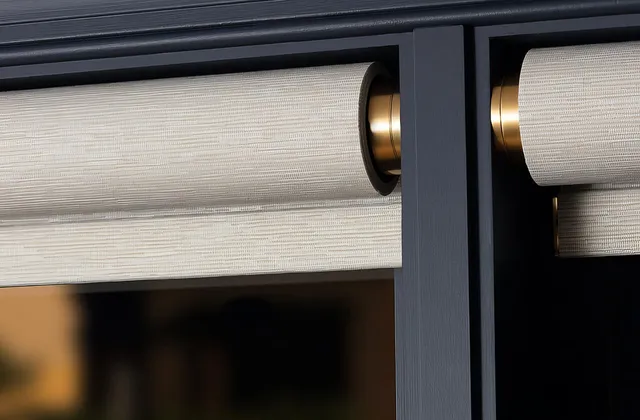
At the top of the range sits Palladiom, a shading system designed to be seen rather than hidden, with hardware finished to a standard that suits it to rooms where the blind is on show. Palladiom is available wired or wire-free, and integrates with Lutron HomeWorks, the whole-house lighting control platform we run live in our showroom. You can read more on our Lutron lighting and blinds page.
Battery vs wired: the key decision
How the blinds are powered determines what’s possible in your project, so it’s usually the first question we settle.
| Feature | Wired | Battery (wire-free) |
|---|---|---|
| Best suited to | New builds and renovations | Finished homes, retrofit |
| Installation | Cables run before plastering | No wiring, no redecoration |
| Maintenance | None day to day | Battery changes every few years |
| Window sizes | Largest windows and heaviest fabrics | Wide coverage, some size limits |
| Planning needed | Early, at first-fix stage | Minimal lead-in |
Wired systems are the gold standard where the walls are open: power and control arrive by cable, so there’s nothing to maintain. Lutron’s wire-free options have changed the retrofit picture, though. Palladiom’s battery system is designed to run for years on standard batteries, and batteries can be changed without taking the blind down. For most existing homes, battery power is what makes automated blinds practical at all.
Fabrics: where the design decisions live
The motor moves the blind; the fabric decides what the room feels like. The main choices:
- Light-filtering fabrics soften daylight while keeping the room bright, which makes them the everyday choice for living spaces.
- Sheer and screen fabrics are rated by openness factor: how much you can see through them. Lower openness means more privacy and glare control; higher keeps the view.
- Blackout fabrics block light fully: the choice for bedrooms and cinema rooms, often run in side channels to seal light gaps at the edges.
- Dual-roller arrangements combine a sheer and a blackout on one window, so the same opening handles bright afternoons and film nights.
Colour and texture matter too, both from inside and — a detail people forget — how the fabric reads from the street. A fabric sample in your actual room beats any swatch book photo.
Retrofit vs new build
Building or renovating? Decide about blinds before first fix. Cabling costs little while walls are open, recesses can be sized for concealed pockets so the blind disappears when raised, and wiring supports the largest windows. Blinds are one of the easiest things to future-proof and one of the most annoying to cable afterwards.
Finished home? Wire-free systems install in much the same time as ordinary blinds, with no chases in the plaster. Control comes from elegant keypads, remotes, the app or your wider smart home system. Lutron shades integrate cleanly with Control4, so “Movie” or “Goodnight” can include them from day one.
What to ask an installer
- Are you an authorised dealer for the system you’re proposing?
- Can I see and hear the blinds working before I order?
- How will the blinds integrate with my lighting and control system?
- Who measures, and who’s responsible if a blind doesn’t fit the recess?
- What’s the arrangement for support and battery changes later?
We’ve been installing integrated systems in Shropshire since 2006, and blinds are one area where experience shows: measurement, fabric selection and programming all have to line up. Contact us to arrange a demo.
Frequently asked questions
How long do the batteries actually last?
Lutron’s Palladiom wire-free system is designed to run for years on a set of standard batteries (typically three to five, depending on use), and the design allows changes without removing the blind. That’s very different from cheaper motors that need charging every few months.
Can automated blinds work with Alexa or my phone?
Yes. Lutron systems work with the main voice assistants and have their own app, and when integrated with Control4 the blinds join whole-house scenes and schedules.
Do smart blinds still work if the internet goes down?
Keypads, remotes and schedules run locally on the Lutron system, so day-to-day control doesn’t depend on your broadband. Only remote access from outside the house needs an internet connection.
Can you automate my existing blinds?
Generally no. Motorised systems are built as complete units, with the motor, tube and fabric engineered together. That’s also why they move so smoothly and quietly compared with retrofit motor kits.
Questions About Any of This?
Whether you already own a system that’s playing up or you’re just starting to plan your first project, tell us what’s on your mind and you’ll get a plain answer from the team. Based in Shrewsbury, working across Shropshire, Cheshire, Staffordshire, the West Midlands and the Welsh borders.
Book a Showroom Demo Book a 20-Minute Call Get In Touch Or call 01743 234945 · info@smccustominstalls.co.uk